Gallery
Below are examples of images reconstructed using Genetic Painter's evolutionary algorithm. Each example shows the original image alongside the painting at different stages of evolution, demonstrating how random shapes gradually converge into a recognizable reproduction.
Charles Darwin — Circles
A portrait of Charles Darwin — the father of the theory of evolution — reconstructed using circles. A fitting subject for a genetic algorithm. Notice how the algorithm first captures the broad light-and-dark structure of the image with large overlapping circles, then gradually refines the features as more shapes are accepted.
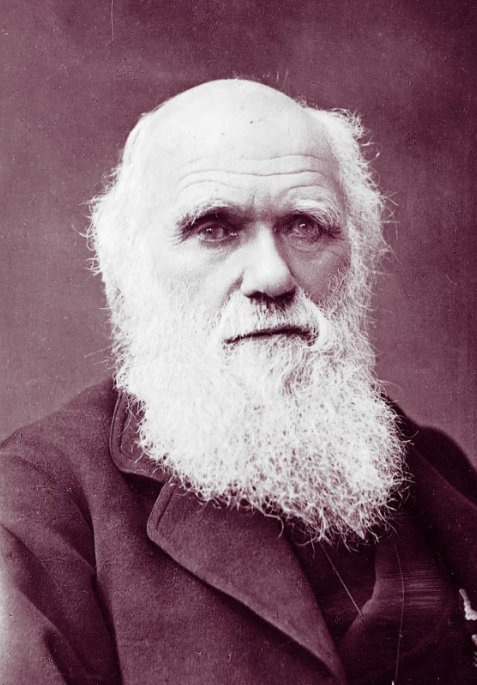 Original
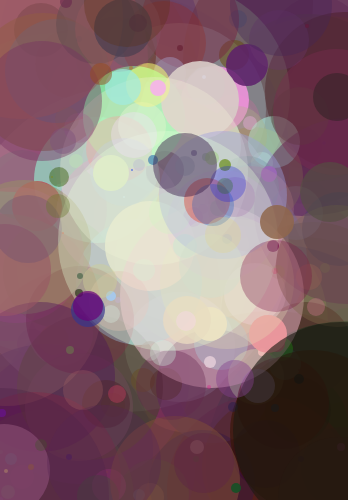 ~100 shapes
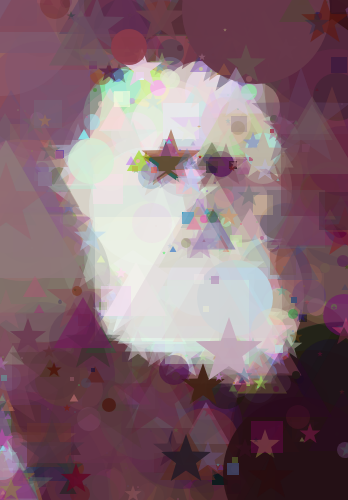 ~1,000 shapes
At just 100 accepted shapes, the image is mostly abstract blobs of color — but the light-dark contrast of Darwin's face and beard against the background is already emerging. By 1,000 shapes, his iconic white beard, dark coat, and the general pose are clearly recognizable. With continued evolution, finer details like eyes, nose, and skin texture would gradually appear.
Understanding What You See
Each painting is built entirely from semi-transparent shapes layered on top of each other. No pixels are set directly — every color you see is the result of dozens of overlapping shapes blending together. This is why early-stage paintings have a distinctive soft, dreamy quality.
The algorithm doesn't "know" it's painting a face or a landscape. It has no concept of edges, objects, or composition. It simply minimizes the mathematical difference between its canvas and the target image, one random shape at a time. The fact that recognizable images emerge from this blind process is what makes evolutionary algorithms so fascinating.
Stages of Evolution
Every painting goes through roughly the same stages, regardless of the source image:
- 0–100 shapes: Large blocks of average color appear. The algorithm is laying down the broadest strokes, capturing the dominant colors and rough light/dark distribution. Most shapes are accepted because any addition to a blank canvas reduces the difference.
- 100–1,000 shapes: Major features become visible — faces, horizons, large objects. The painting looks impressionistic, like a watercolor viewed from across a room. The acceptance rate begins to drop as easy improvements become scarce.
- 1,000–10,000 shapes: Details emerge. Eyes, mouths, text, and fine textures start to resolve. Reducing the maximum radius at this stage forces the algorithm to paint with finer brushstrokes.
- 10,000–100,000 shapes: The painting becomes a close reproduction of the original. Only very small, precisely placed shapes are accepted. The difference between the painting and the original becomes difficult to see at a glance.
Try It Yourself
Want to create your own evolutionary artwork? Head to the homepage, upload any image, and start the algorithm. Check out our step-by-step tutorial for tips on getting the best results, or learn how the algorithm works under the hood.